


SKU:PZN 03919815
Hewedolor Procain 2%
Couldn't load pickup availability
Description
Hewedolor Procain 2% is a local anesthetic used in neural therapy by trained doctors or natural practitioners. It supports segmental and interference field therapy by targeting the autonomic nervous system. Injected into specific skin areas (Head’s zones), it can influence related organs and reduce symptoms caused by chronic inflammation or interference fields such as scars, tonsils, or jaw issues.
Ingredients
- Procain-HCl

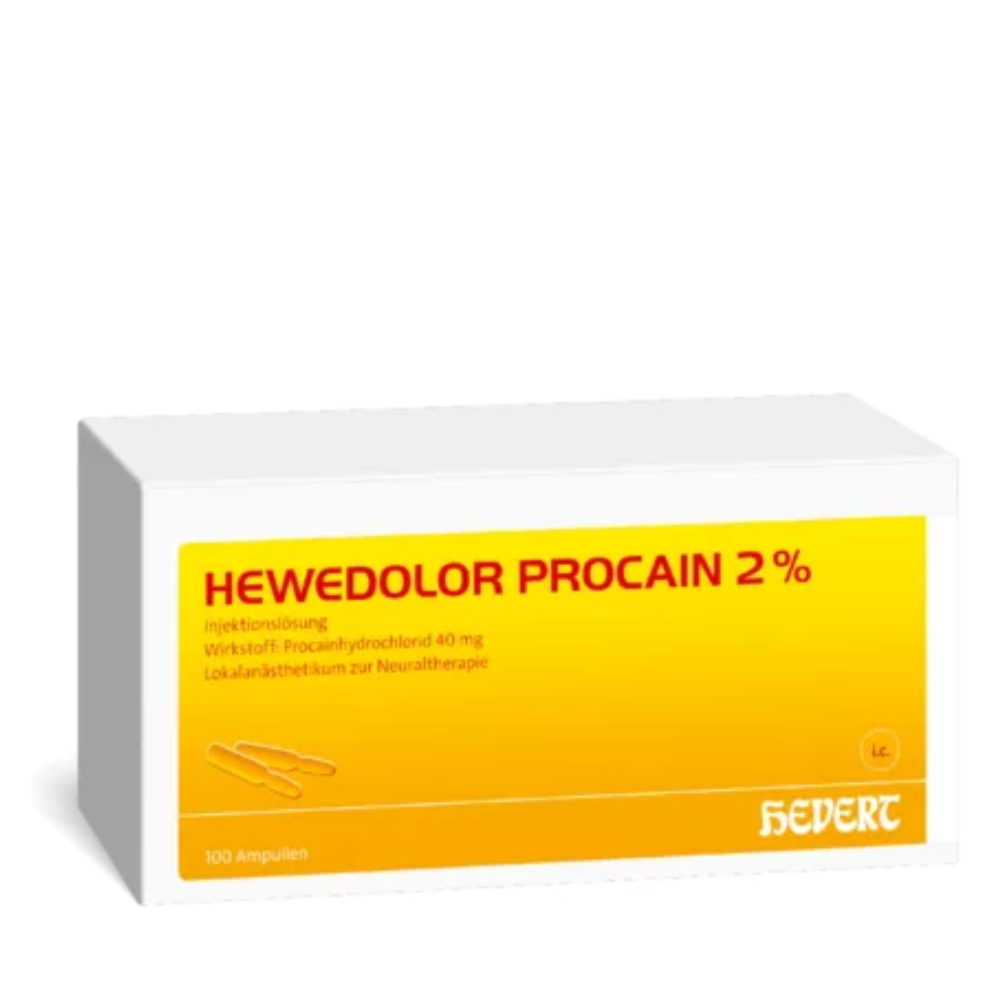
Hewedolor Procain 2%
Neural therapy
with Hewedolor Procain 2%
Neural therapy consists of segmental therapy and interference field therapy. Segmental therapy is based on the assumption that the internal organs correspond to specific segments of the skin (dermatomes) and are connected with them via nerves (Head’s zones). The attending doctor or natural practitioner injects a local anesthetic (e.g. procaine or lidocaine) into the skin and reaches the corresponding organ via the nerve. This frequently gives rise to small protrusions known as wheals. That is why neural therapy is often also referred to as wheal therapy. The aim of neural therapy is to attain an effect in the affected segment via the autonomic nervous system.
In interference field therapy, “interference fields” triggered by chronic inflammations are treated. Interference fields are believed to weaken the entire body and can cause symptoms in other areas of the body. The most common interference fields can be found in the tonsils, the sinuses, the tooth/jaw region, the thyroid, and in scars, although any site in the body can actually become an interference field. Treatment with Hewedolor Procain 2% should be carried out by a natural practitioner or doctor with experience in neural therapy.
Hewedolor Procain 2% is a local anesthetic for neural therapy
- Contraindications
- Adverse Effects
- Recommended use
- Hypersensitivity to ester-type local anesthetics, benzoic acid (parabens), or sulfonamides
- Pseudocholinesterase deficiency (delayed Procain breakdown)
- Intra-arterial, epidural, or spinal injection
- Caution required in:
- Myasthenia gravis
- Cardiac conduction disorders
- Heart failure
- Inflammation at injection site
- Combined use with anticoagulants, NSAIDs, plasma expanders
- Pregnancy and breastfeeding: Only with strict indication
-ECG changes (flattened T-wave, shortened ST segment)
- Hypotension with relative overdose
- CNS effects: tingling around the mouth, restlessness, confusion, seizures
Allergic reactions:
- Rare: hives, swelling, bronchospasm, shortness of breath, circulatory collapse
- Local: skin inflammation, redness, itching, blisters
- Tachyphylaxis (reduced effect after repeated use)
- For neural therapy by intracutaneous injection
- Used to block or influence pain conduction and vegetative dysfunction
- Effective in treatment of:
- Localized pain (e.g. joints, scars, muscles)
- Trigger points
- Segment therapy (e.g. Head's zones)
- Maximum single dose:
*General tissues: 500 mg Procain (25 ml of Hewedolor Procain 2%)
*Head, neck, genital area: 200 mg Procain (10 ml), within 2 hours
In patients with vascular diseases, atherosclerosis, diabetes-related nerve damage, or impaired liver/kidney function: reduce dose by one-third.